
What a Technician Sees After a Windstorm Call
The calls usually come in the day after a hard blow. A homeowner walks into the garage and finds a section bowed inward like someone leaned on it from outside, or a panel has popped clean out of the track. Sometimes the door still looks fine from the street, but the rollers have been pushed partway out of the track rail and the door is grinding instead of gliding. In the worst cases, the whole door has been shoved several inches off its tracks and won't move at all, manual release included. Almost every one of these jobs traces back to the same thing: wind got behind a door that wasn't braced to handle the pressure, and the door became the point of failure.
Why the Garage Door Is the Weakest Wall on the House
Every other exterior wall on a typical house is a solid, continuous structure tied into the framing. The garage door is the opposite: it's a large moving panel, held in place mostly by rollers riding in thin metal tracks and a set of hinges between sections. It's also usually the single biggest opening in the home's exterior, which means it catches more wind load than any window or wall section of the same size.
When wind hits a closed house, pressure builds on the windward side and drops on the leeward side. If the garage door fails and lets wind rush into that big open bay, the pressure can push up and out on the roof from the inside, which is why garage door failure is so often the first domino in roof and truss damage during a serious windstorm. The door doesn't have to blow open dramatically to cause that kind of damage; it can simply flex enough to let air in around the edges and under the bottom seal.
Older and Lighter Doors Are More at Risk
Homes with older single-layer steel doors, or doors that have never had any kind of wind bracing installed, are the ones that tend to show up on the service call list after a bad storm. These doors can look perfectly normal for years and then fail in a single event because nothing in their design was ever meant to resist sustained lateral pressure.
Signs Your Door Isn't Ready for High Wind
- Visible flex when you press on a panel by hand, especially near the center of the door
- Worn or bent rollers that already sit loosely in the track, giving the door less to hold onto when pressure increases
- Thin, unreinforced track that bends if you grip and twist it gently
- No horizontal struts on the back of the panels (common on older doors and some basic builder-grade doors)
- Weatherstripping that's cracked or pulling away, leaving gaps where wind-driven rain can force its way in even before the door itself is stressed
- An opener with no battery backup, which matters if a storm knocks out power and you need to get a vehicle out or secure the door manually
Steps to Take Before the Next Wind Event
1. Check and Tighten the Track Hardware
Loose lag screws and brackets are one of the easiest things to miss and one of the fastest to fix. Track that's even slightly out of alignment gives a door far less margin before it jumps the rail in a gust.
2. Inspect Rollers and Hinges
Worn nylon rollers or hinges with elongated holes should be replaced before storm season, not after a door has already come off track. This is routine maintenance work, but it's the kind that directly affects whether a door holds its position under pressure.
3. Add or Verify Horizontal Bracing
Reinforcement struts bolted across the back of each panel significantly increase a door's resistance to wind pressure. If your door doesn't have them and you're in an area that gets regular high-wind events, retrofitting struts is usually far cheaper than replacing a damaged door and its opener after the fact.
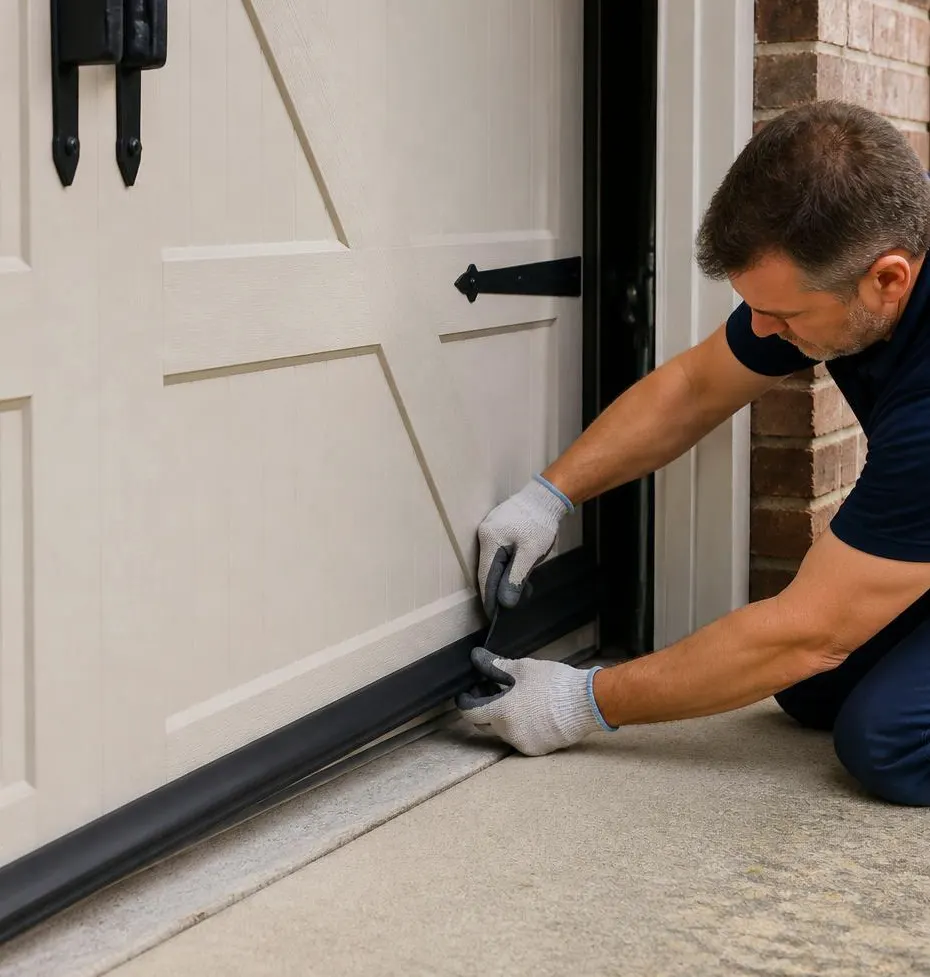
4. Reseal the Bottom and Side Weatherstripping
Gaps let wind-driven rain and debris in even when the door itself holds firm. New seals are inexpensive insurance against water finding its way to stored belongings or a finished garage floor.
5. Test the Manual Release
If the power goes out mid-storm, you want to know the manual disconnect actually works before you need it, not during an emergency. A release cord that's seized up or hard to reach is a problem worth solving in advance.
6. Clear the Approach
Loose items near the door, patio furniture, trash cans, ladders, become projectiles in a serious wind event. Keeping the area clear reduces the chance of something striking and denting a panel, which weakens it right at the spot most likely to flex under pressure.
Spring brings its own round of severe storms and tornado risk to this part of Illinois, so a door that's been checked and reinforced now is doing double duty: getting through the fall wind events and starting next year's storm season already prepared.
When to Call Sycamore Garage Door Specialists
If pressing on a panel reveals flex, a roller looks worn or bent, or the door has already come partway off track after a recent storm, it's time to get it looked at before the next system rolls through. Our team handles both Garage Door Repair for doors that have shifted, dented, or jammed after wind events, and Garage Door Installation for homeowners whose current door is too old or too light-duty to brace effectively. We'll check tracks, rollers, hinges, and seals, and tell you honestly whether reinforcement or replacement makes more sense for your door and your budget.
Call Sycamore Garage Door Specialists today to get your garage door storm-ready before the next high-wind event moves through Sycamore, IL.