
The short answer
Getting a garage door ready for winter means checking four things before the first hard freeze: the weatherstripping and seals, the springs and balance, the opener's sensors and lubrication, and the hardware that takes the brunt of road salt and ice. Do those now, in October, while temperatures are still mild enough to work comfortably and parts haven't seized up yet. Waiting until January usually means dealing with a problem in the cold, which is harder on both you and the door.
Check the weatherstripping first
The rubber seal along the bottom of the door and the strips along the sides are the first line of defense against wind-driven snow and cold air. After a humid summer, this rubber is often cracked, flattened, or pulling away from the track. Run your hand along the bottom seal and look for gaps where daylight shows through. If the garage is attached to living space, a bad seal doesn't just let in cold air — it lets in moisture that can freeze and expand, making the gap worse. Replacing bottom seal and side weatherstripping is inexpensive and usually a same-day fix.
Don't ignore the top seal
Many homeowners check the bottom seal and forget the strip where the door meets the header above it. That gap is a common spot for cold drafts and for wind-blown snow to sneak in during a winter storm. If you can see light around the top corners when the door is closed, that seal needs attention too.
Springs behave differently in the cold
Steel contracts as temperatures drop, and torsion springs lose a small amount of tension in deep cold. A door that was balanced and quiet in August can start to feel heavier, open unevenly, or make a new grinding sound once overnight lows drop into the teens or single digits. If you notice the opener straining, the door drifting when it's halfway open, or a visibly sagging panel, that's a sign the spring tension needs adjusting before it fails outright. Springs that are already near the end of their cycle life are more likely to snap in cold weather, since cold steel is more brittle than steel at room temperature. This is one of the more dangerous DIY jobs in the whole house — torsion springs are under heavy load — so this is a case where calling in a professional for spring replacement is worth it rather than attempting it yourself.
Give the opener and sensors a fall tune-up
Cold weather is hard on garage door openers in a few specific ways. Chain and screw-drive openers need fresh lubrication before winter; grease that was fine in July can thicken and slow the mechanism once temperatures drop. Check the photo-eye safety sensors near the bottom of the tracks, too — these get knocked out of alignment easily, and once road salt, slush, or dirty snowmelt splashes up and coats the lenses, the door may refuse to close or reverse unexpectedly. Wipe them clean and make sure they're pointed directly at each other. If your opener has a battery backup, test it now; winter storms in this area can knock out power, and a dead backup battery means a manual release and a hand crank until power returns.
Listen for new noises
A door that's starting to groan, squeal, or hesitate in cool fall mornings will usually get louder and more frequent as it gets colder. Rollers, hinges, and the track itself all benefit from a garage-door-specific lubricant (not WD-40, which attracts grit) applied now, before the first freeze sets nylon rollers and metal hinges into a stiffer rhythm.
Protect hardware from salt and ice
Road salt tracked in on tires and boots is one of the bigger quiet threats to a garage door system over a DeKalb County winter. Salt residue speeds up rust on tracks, hinges, and the bottom of steel panels, and ice buildup at the base of the door can physically block it from sealing or even opening. A quick hose-down of the lower track and panel on milder days, followed by a wipe-down, keeps corrosion from taking hold over the season. If the door sits low enough that meltwater pools at the threshold, a simple threshold seal can keep that water from refreezing directly under the door.
Insulation matters more than people think
If the garage shares a wall with living space, or if you park a vehicle there and want to avoid dealing with a frozen car every morning, an insulated door (or an insulation retrofit kit on an existing door) makes a real difference during the big seasonal temperature swings common here. It won't turn the garage into a heated room, but it narrows the gap between outside and inside temperatures enough to reduce condensation, which in turn reduces the ice buildup that forms on tracks and hardware.
When to call Sycamore Garage Door Specialists
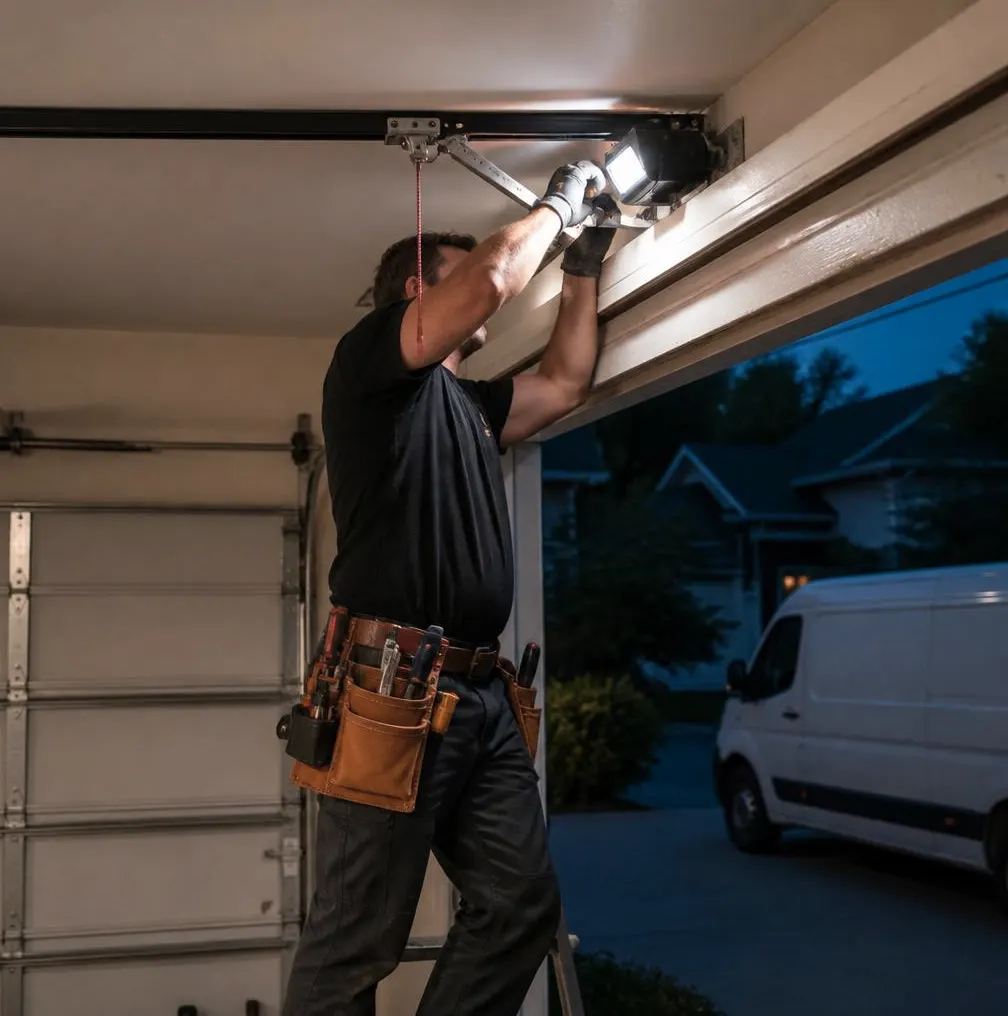
If your door is sagging, making new grinding or snapping sounds, or the opener is struggling to lift it, don't wait for a cold snap to force the issue. We handle spring replacement safely with the right tools and tension gauges, and we offer garage door maintenance visits that cover lubrication, sensor alignment, hardware inspection, and weatherstripping — the exact fall checklist above, done right the first time. Catching a worn spring or a misaligned sensor in October is a lot less stressful than dealing with a dead door during a January cold snap.
If you're in Sycamore, DeKalb, Genoa, Cortland, Maple Park, Malta, Kingston, or Sandwich and want your garage door checked before winter sets in, call Sycamore Garage Door Specialists today to schedule a fall maintenance visit.